

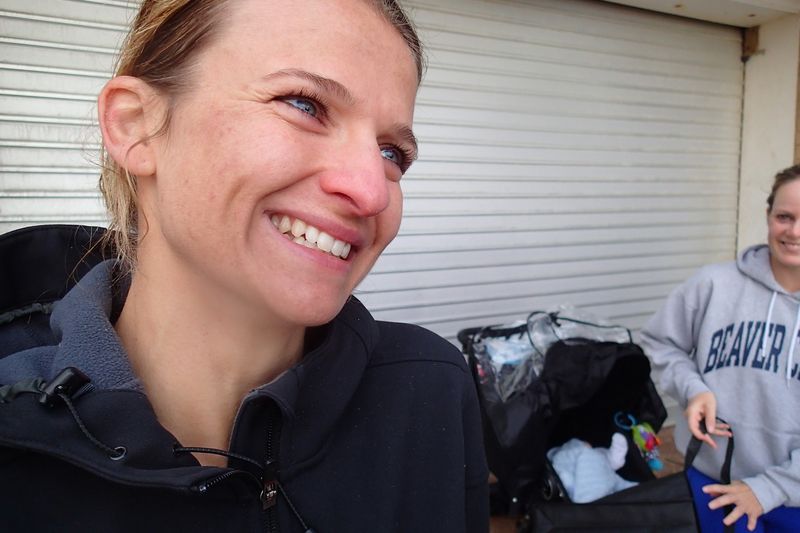
Sydney area
Chance of a shower along the coastal fringe. Partly cloudy in the morning, becoming mostly sunny in the afternoon. Winds west to southwesterly and light becoming north to northeasterly in the middle of the day.
That was the forecast from the BOM.
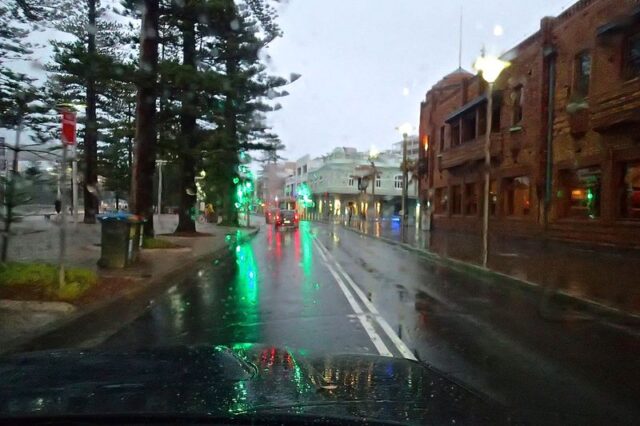
This was the view from the windscreen….
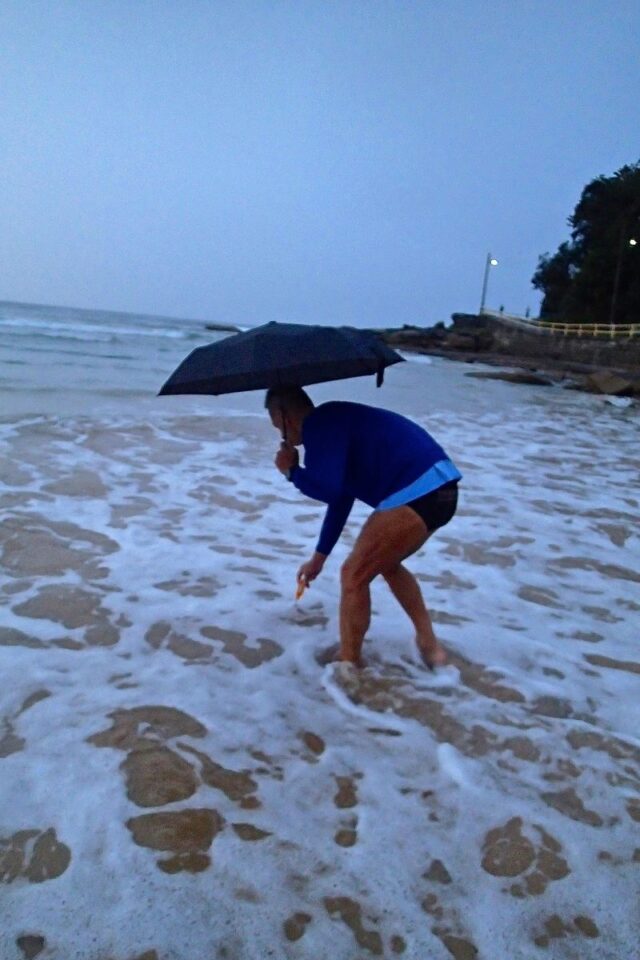
JB took the temp taking care not to get wet…. 21.8c
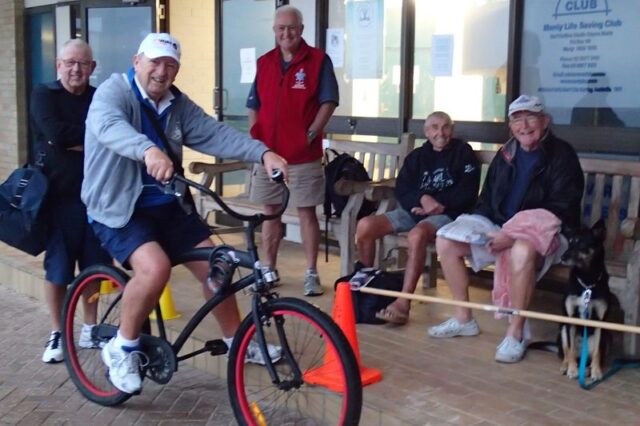
Here’s the Manly chapter of the Hell’s Angels. Hanging outside their clubhouse and meth lab.
We asked them what was the best thing about having a meth lab… and they replied “Only 2 more sleeps til Christmas!”
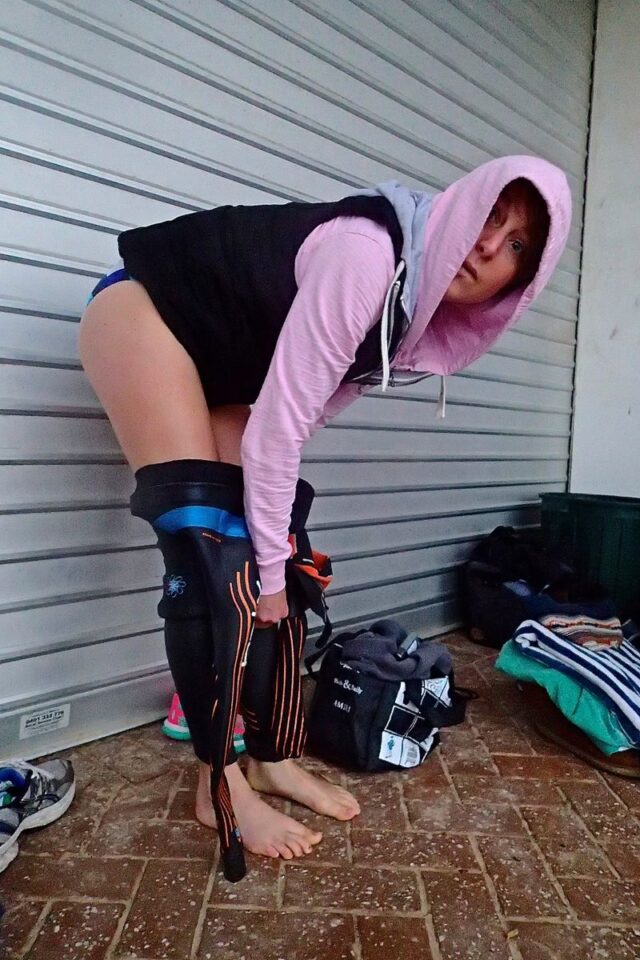
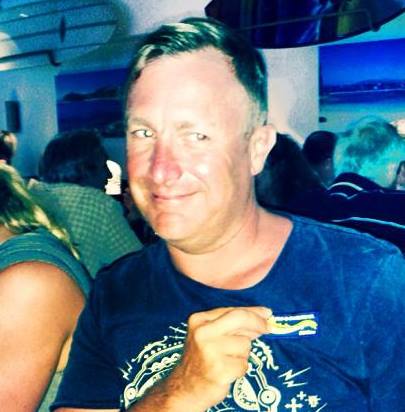
Don’t be alarmed Ma’am …. just the blogger 🙂
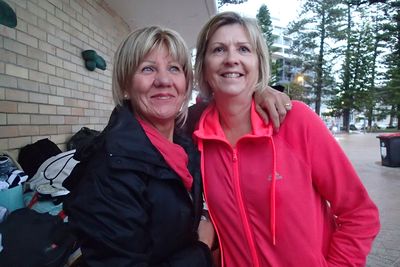
Val’s 60th! Happy Birthday Val – with Jill Rankin
Mark and laura were photobombed again! Can you believe it….!
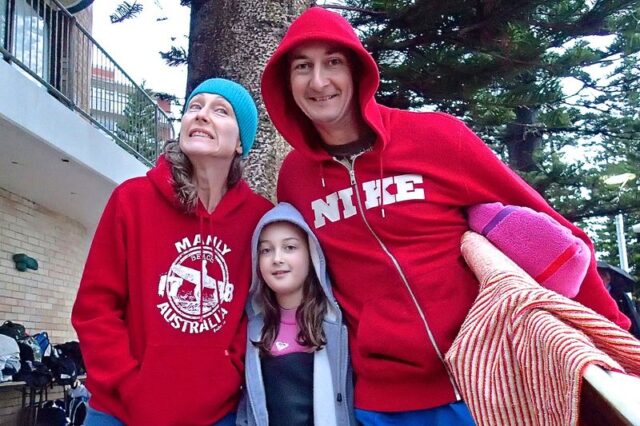
You guys can write your own capions for this one ….
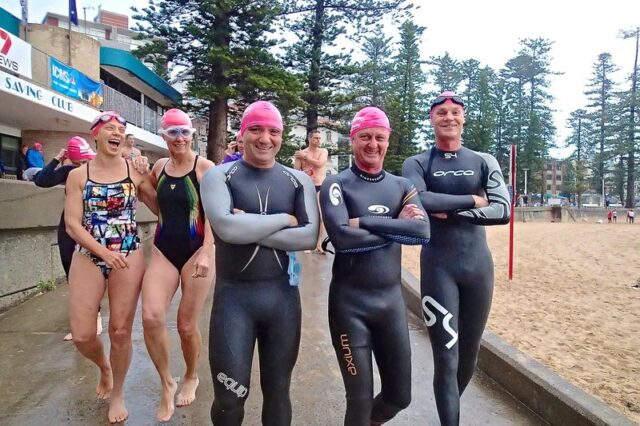
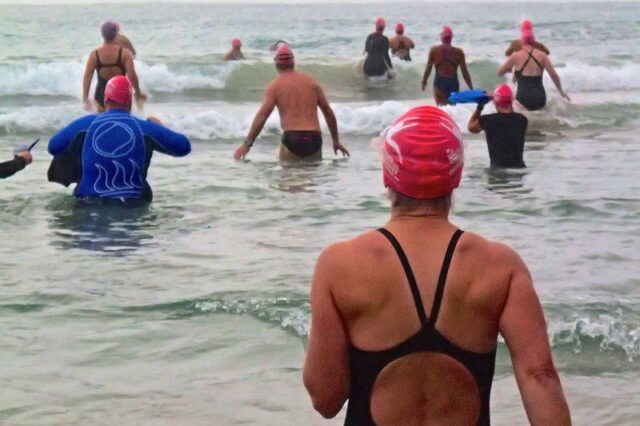
Inez has returned! There she is in the middle….
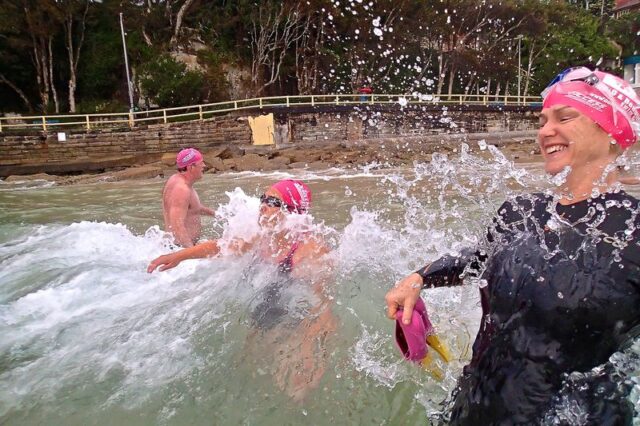
John Kelly thinks it’s funny poking people in the eyes… all the responsibility is finally getting to him..
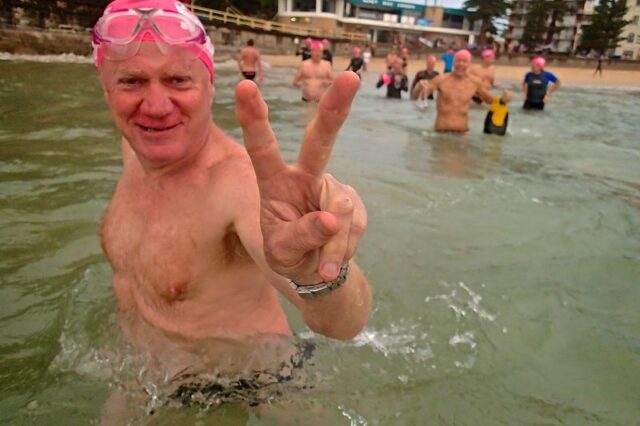
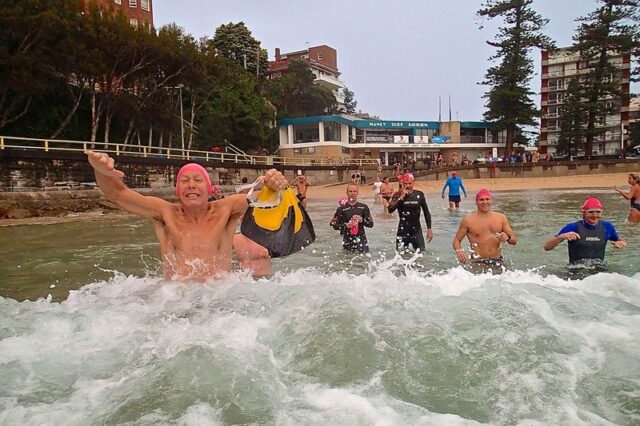
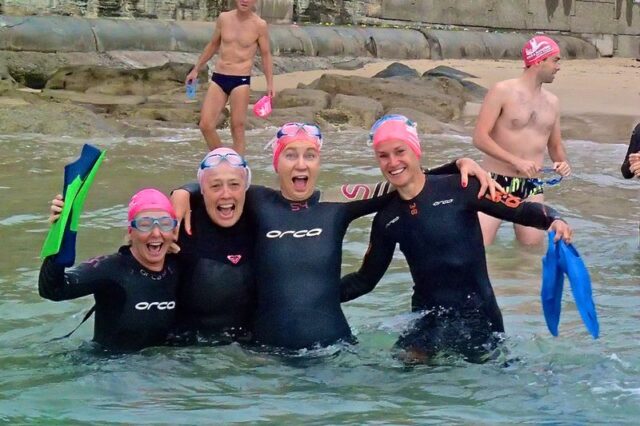
If you’re bored – try swimming drunk…
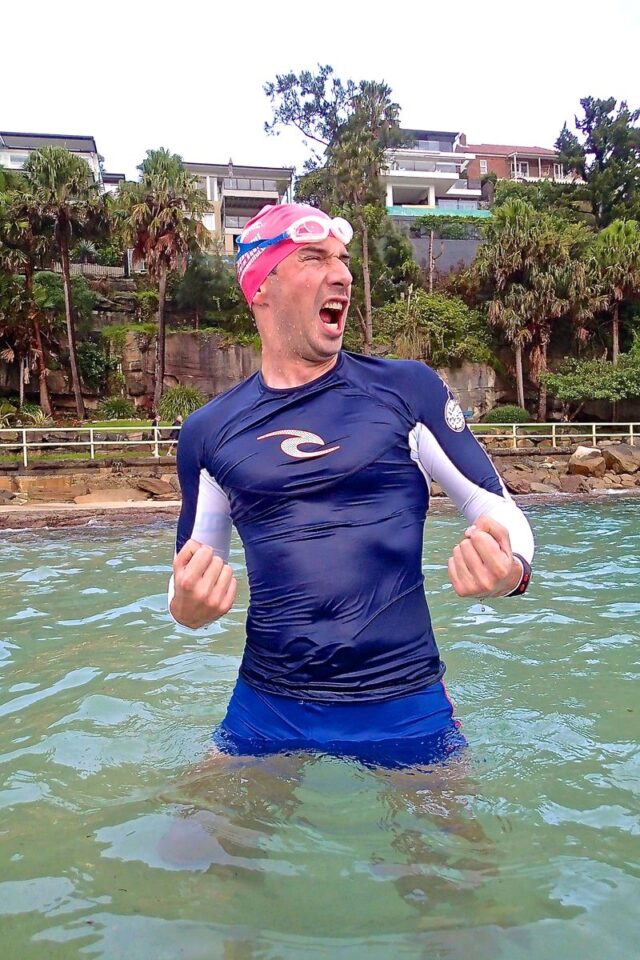
Someone has a new rashie…
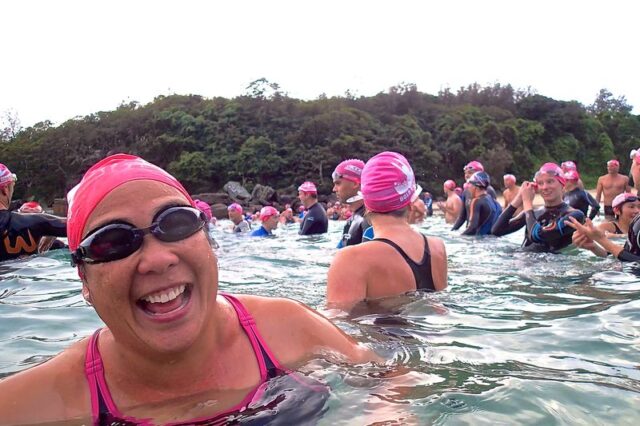
Did I mention – Inez is back?
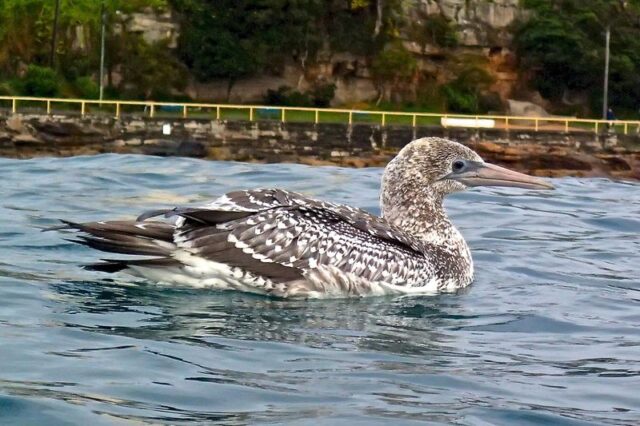
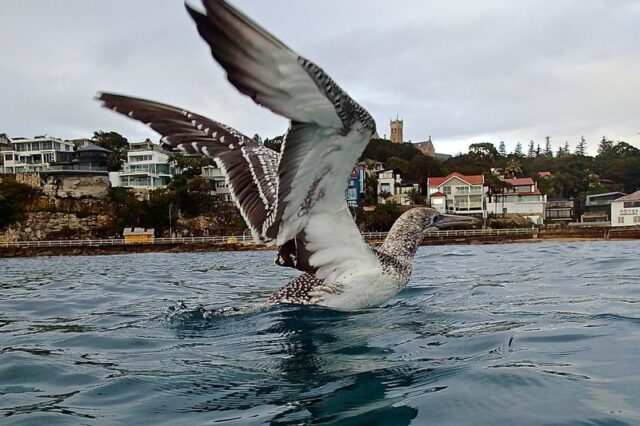
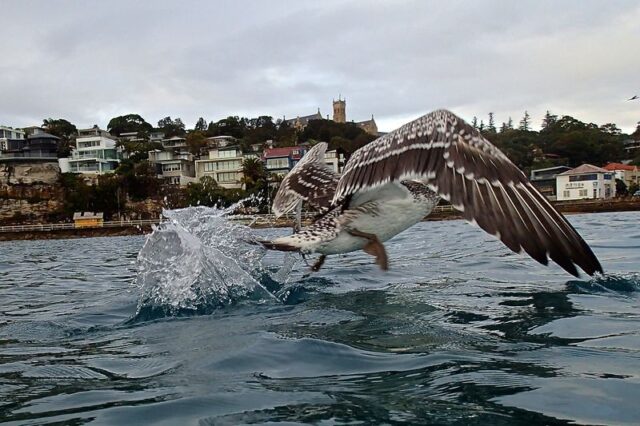
An aweosme sight in the bay this morning were these juvenile Gannet. They were dive bombing fish in the bay. Eve though these were young, their wingspan was still a few feet – they were impressive!
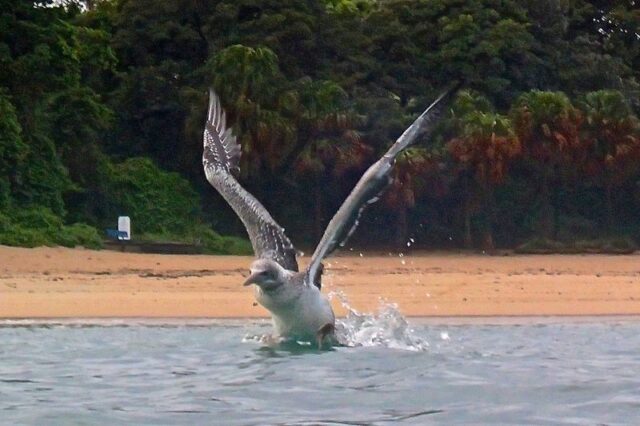
The Australasian Gannet (Morus serrator or Sula bassana), also known as Australian Gannetand Tākapu, is a large seabird of the gannet family Sulidae.
Adults are mostly white, with black flight feathers at the wingtips and lining the trailing edge of the wing. The central tail feathers are also black. The head is yellow, with a pale blue-grey bill edged in black, and blue-rimmed eyes.
Young birds have mottled plumage in their first year, dark above and light below. The head is an intermediate mottled grey, with a dark bill. The birds gradually acquire more white in subsequent seasons until they reach maturity after five years.
Their breeding habitat is on islands and the coast of New Zealand, Victoria and Tasmania, with 87% of the adult population in New Zealand. They normally nest in large colonies on coastal islands. In New Zealand there are colonies of over 10,000 breeding pairs each at Three Kings Islands, Whakaari / White Island and Gannet Island. There is a large protected colony on the mainland at Cape Kidnappers (6,500 pairs). There are also mainland colonies at Muriwai andFarewell Spit, as well as numerous other island colonies.[2]
Gannet pairs may remain together over several seasons. They perform elaborate greeting rituals at the nest, stretching their bills and necks skywards and gently tapping bills together. The adults mainly stay close to colonies, whilst the younger birds disperse.
These birds are plunge divers and spectacular fishers, plunging into the ocean at high speed. They mainly eat squid and forage fish which school near the surface. It has the same colours and similar appearance to the Northern Gannet.
Numbers of Australasian Gannet have been increasing since 1950, although some colonies have disappeared and others have decreased in size.
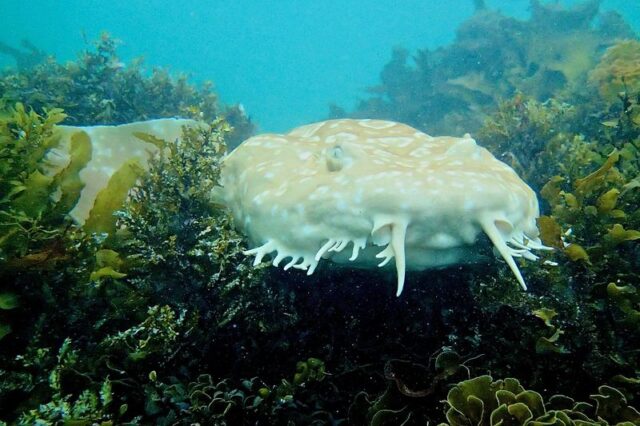
The first thing we ran into just off the beach was a very pale smiling Wobbegong
Here’s a juvenile cuttlefish in the sand…
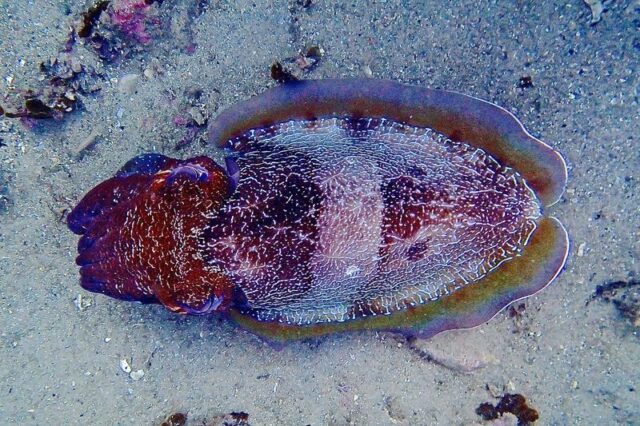
He’s thinking – If I just go over here and turn into seaweed….
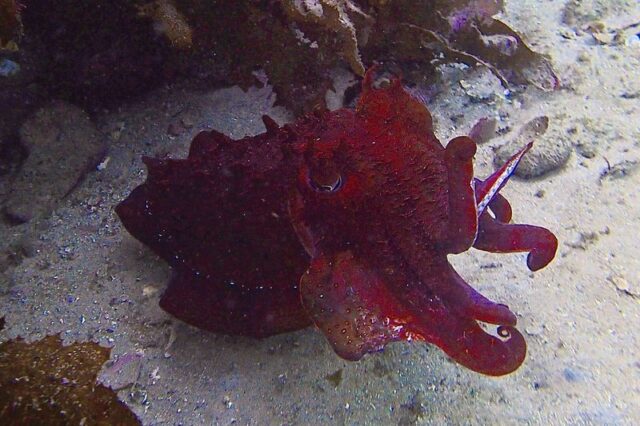
…they’ll never find me!
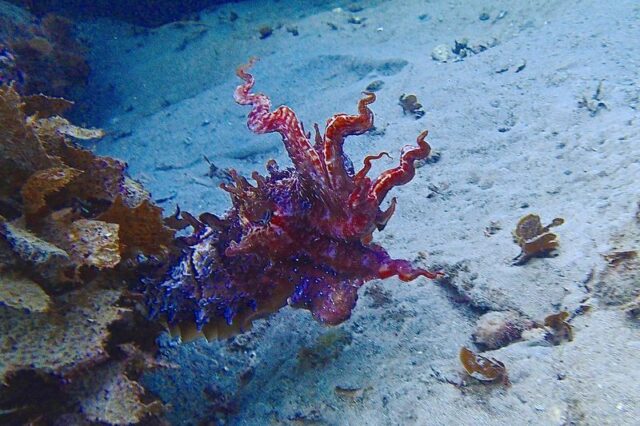
Yep.. nothin here but red seaweed….
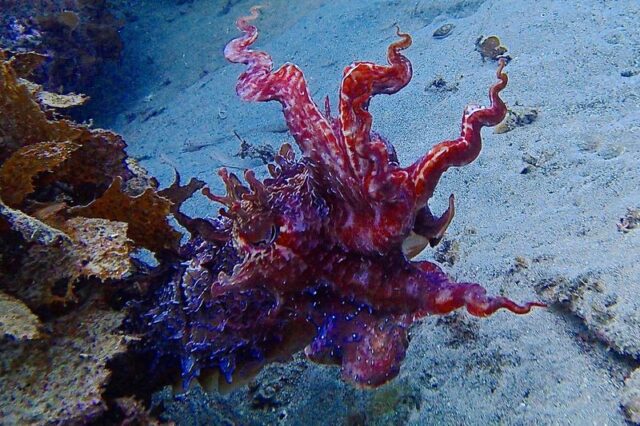
There’s been a few yellowtail this week…
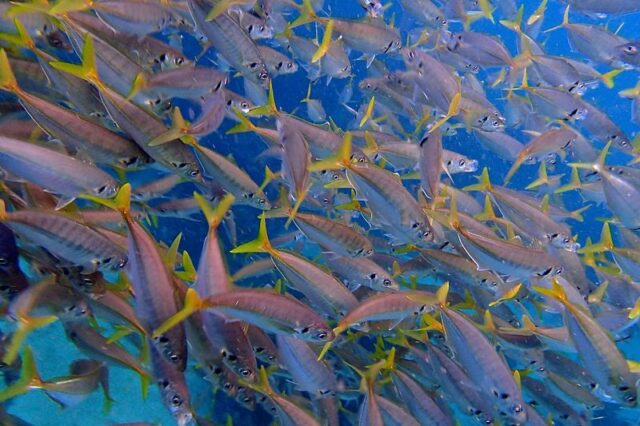
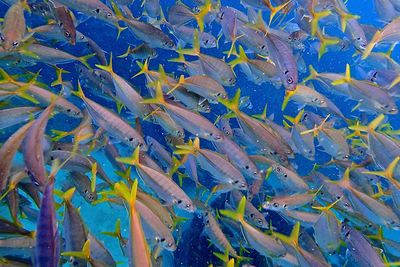
And one of the old favourites…
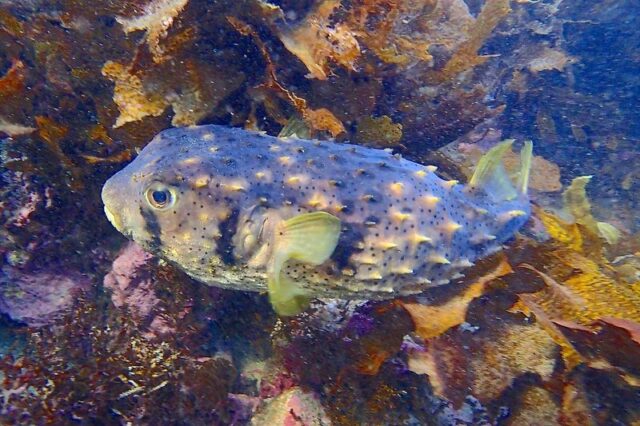
Here’s some stuff you might not know about Puffy – this is how he rolls….
Tetraodontidae is a family of primarily marine and estuarine fish of the order Tetraodontiformes. The family includes many familiar species, which are variously called pufferfish, puffers, balloonfish, blowfish, bubblefish, globefish, swellfish,toadfish, toadies, honey toads, sugar toads, and sea squab.[1] They are morphologically similar to the closely relatedporcupinefish, which have large external spines (unlike the thinner, hidden spines of Tetraodontidae, which are only visible when the fish has puffed up). The scientific name refers to the four large teeth, fused into an upper and lower plate, which are used for crushing the shells of crustaceans and mollusks, their natural prey.
Pufferfish are generally believed to be the second-most poisonous vertebrates in the world, after the golden poison frog. Certain internal organs, such as liver, and sometimes the skin, contain tetrodotoxin and are highly toxic to most animals when eaten; nevertheless, the meat of some species is considered a delicacy in Japan (as 河豚, pronounced as fugu),Korea (as 복 bok or 복어 bogeo ), and China (as 河豚 hétún) when prepared by specially trained chefs who know which part is safe to eat and in what quantity.
The puffer’s unique and distinctive natural defenses help compensate for its slow locomotion. It moves by combiningpectoral, dorsal, anal, and caudal fins. This makes it highly maneuverable, but very slow, and therefore a comparatively easy predation target. Its tail fin is mainly used as a rudder, but it can be used for a sudden evasive burst of speed that shows none of the care and precision of its usual movements. The puffer’s excellent eyesight, combined with this speed burst, is the first and most important defense against predators.
Its backup defense mechanism, used if successfully pursued, is to fill its extremely elastic stomach with water (or air when outside the water) until it is much larger and almost spherical in shape. Even if they are not visible when the puffer is not inflated, all puffers have pointed spines, so a hungry predator may suddenly find itself facing an unpalatable, pointy ball rather than a slow, tasty fish. Predators which do not heed this warning (or which are “lucky” enough to catch the puffer suddenly, before or during inflation) may die from choking, and predators that do manage to swallow the puffer may find their stomachs full of tetrodotoxin, making puffers an unpleasant, possibly lethal, choice of prey. This neurotoxin is found primarily in the ovaries and liver, although smaller amounts exist in the intestines and skin, as well as trace amounts in muscle. It does not always have a lethal effect on large predators, such as sharks, but it can kill humans.
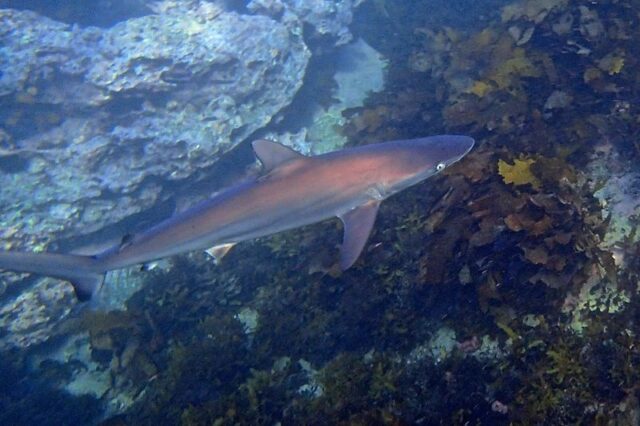
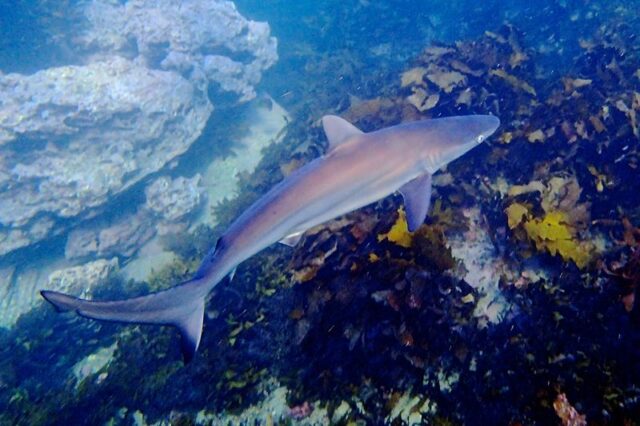
Duskies have been around all week….
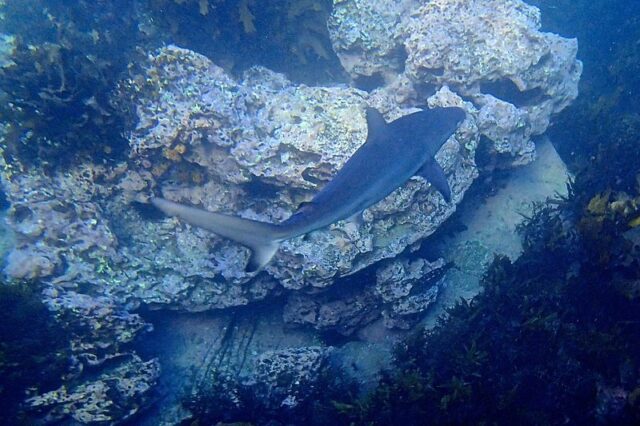
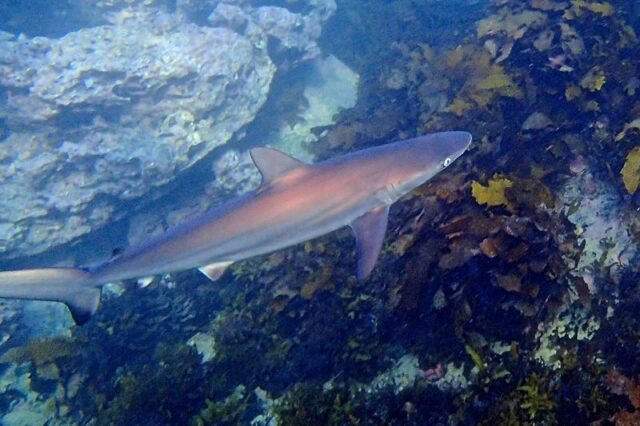
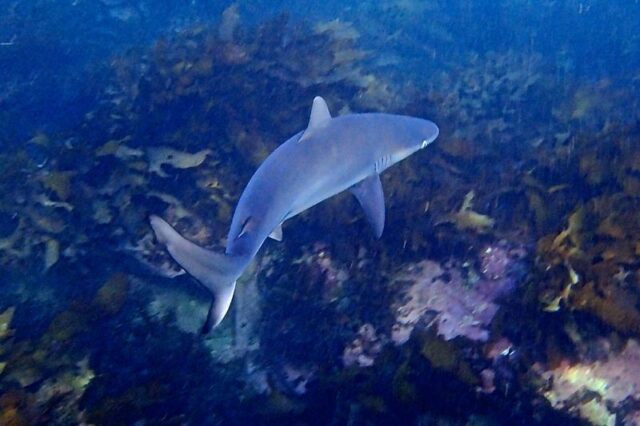
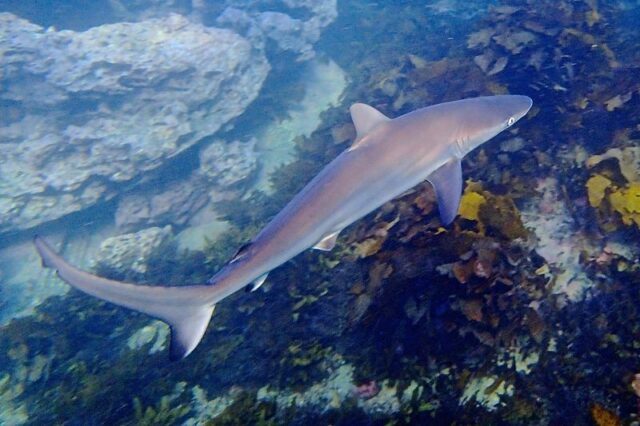
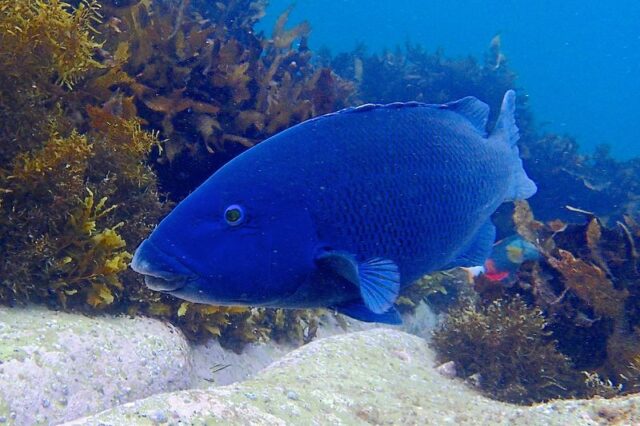
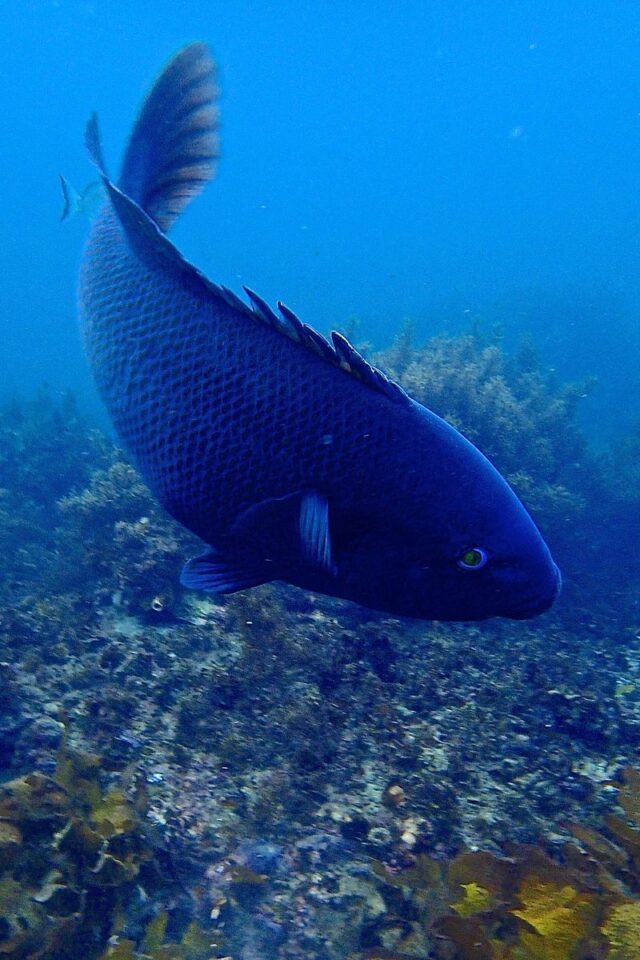
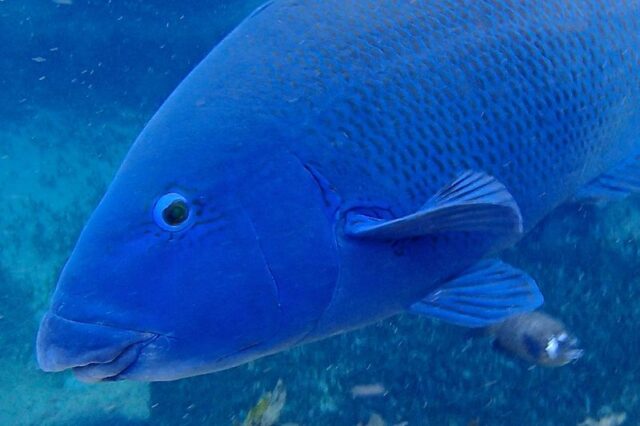
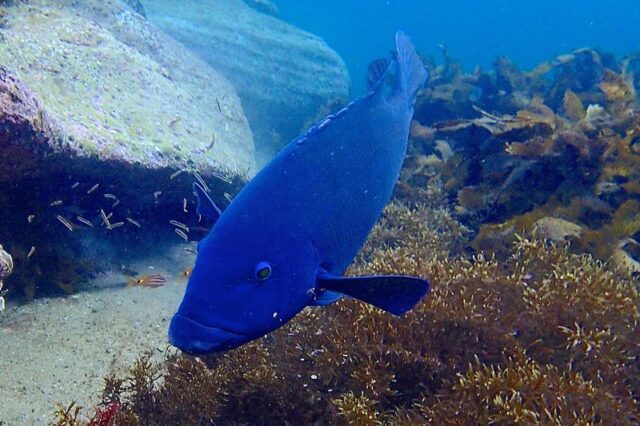
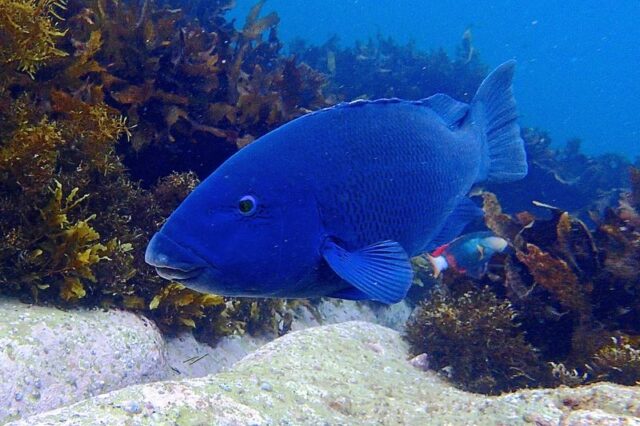
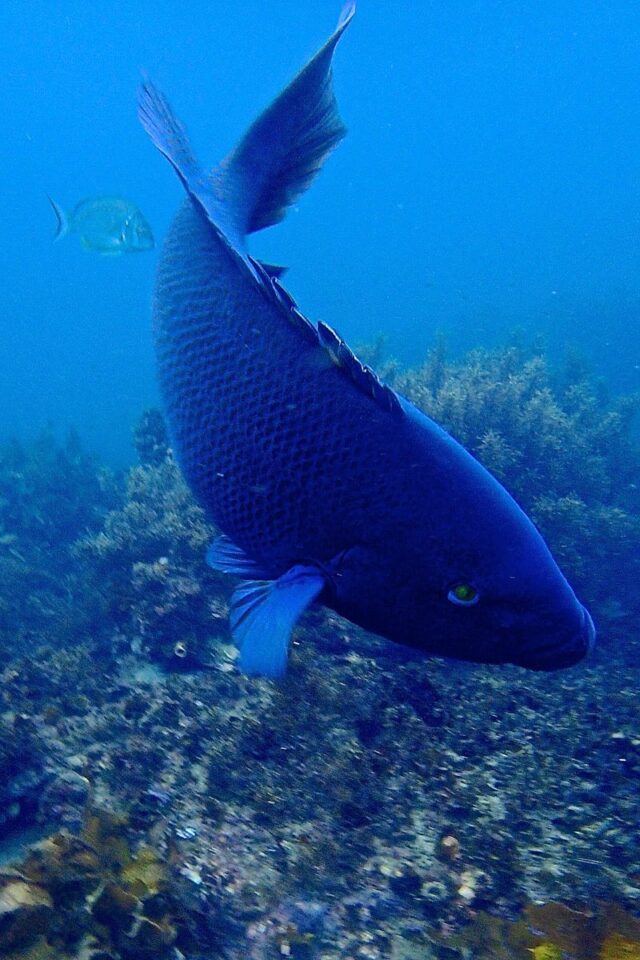
..and one very friendly Blue Grouper…
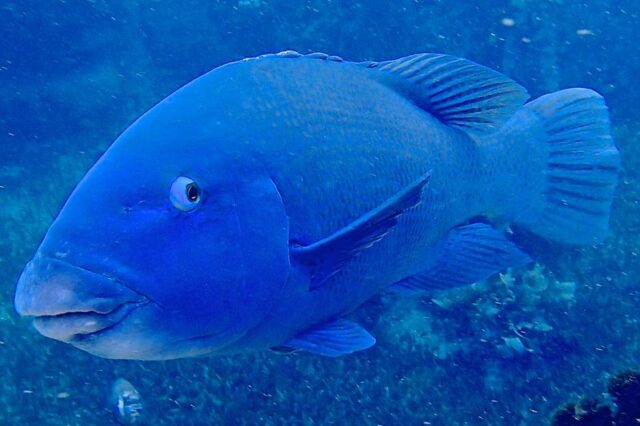
Who sometimes thinks he’s a Koi Carp….
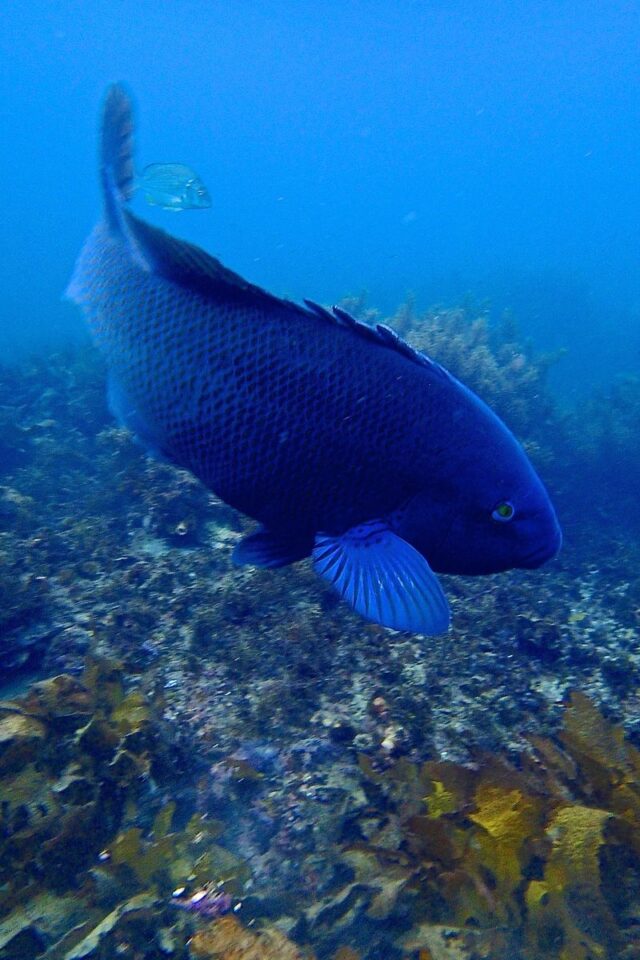
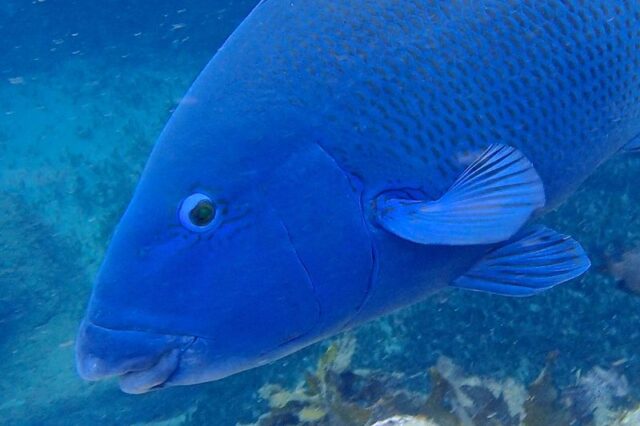
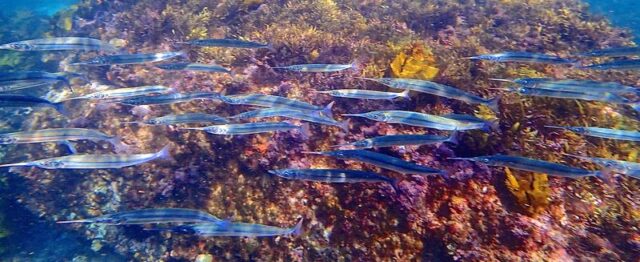
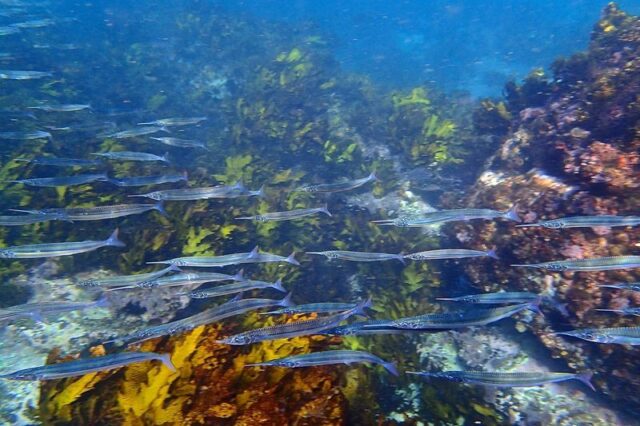
Finally the water was clear enough to get a decent look at the Garfish….
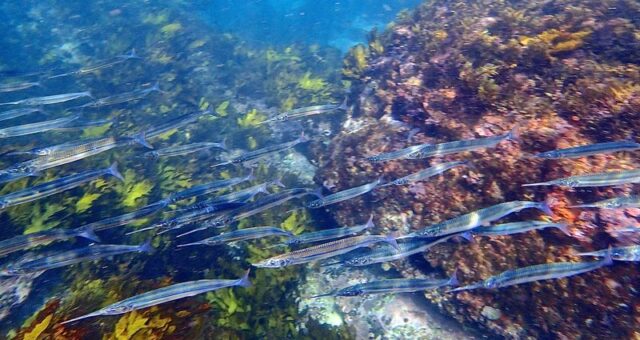
Some stuff about Garfish…
The garfish is a long and slender fish with a laterally-compressed body, and grows to about 50 to 75 centimetres (20 to 30 in) in length. The jaws are elongated and armed with sharp teeth. The pectoral, dorsal and anal fins are situated well back on the body and the latter two are similar in appearance. Positioning the fins so far back gives greater flexibility to the body. The lateral line is set low on the flanks. The colour of the body is bluish green with a silvery grey belly and the bones are green.[1]
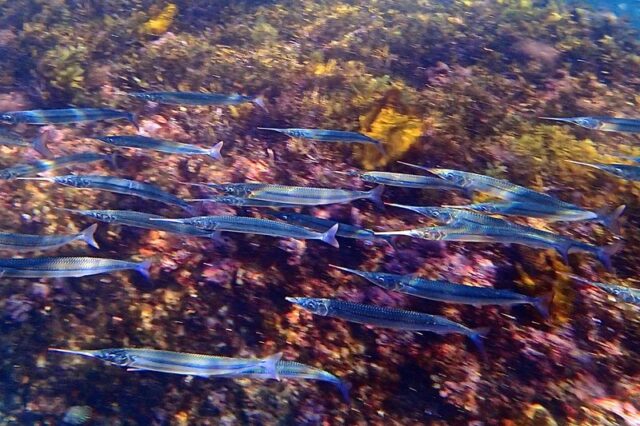
Garfish are Pelagic fish. The fish lives close to the surface and eats small fish, has a migratory pattern similar to that of the mackerel, arriving a short time before the latter to spawn. They move into shallow waters in April and May and spawn in areas with eel grass in May and June. In the autumn they return to the open sea, including the Atlantic west of theBritish Isles. Garfish are oviparous and the eggs are often found attached to objects in the water by tendrils on the egg’s surface.
The garfish is a predator and hunt in the open sea seeking out shoals of small fish such as Atlantic herring, sprats, sand eels and even three-spined sticklebacks. They also feed on free-swimming crustaceans.
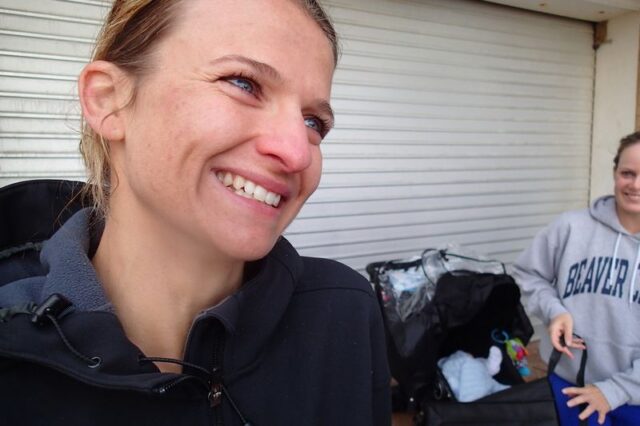
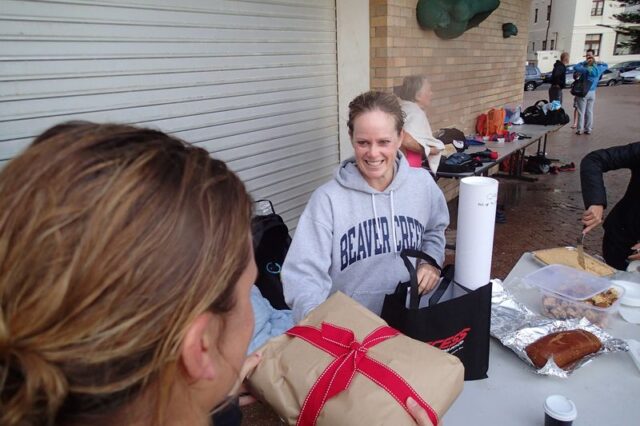
And finally – Kath Jackson is leaving us – to go back to Sth Africa –
– so, Dicey organised a little farewell, with presents and some weird South African cakes and biscuits that tasted awesome!
Stats:
Swimmers: 90!
Newbs: 1
Water temp 21.8c
Sunny?: Nope
Raining?: Yep
Good Swim?: Always!
Have a great weekend – Nick D
B&B i-Log
Really if you haven’t been using the B&B i-Log then you must be new!! Almost 75% of swimmers are now using the B&B i-Log. Log your swim ANYTIME of day using this really efficient and easy way to ensure your swim is recorded in the daily attendance and on the Pacific Challenge. To get started, send an email to Ian Forster ugoboyo@gmail.com(This is not a link so please copy and paste into your email). He will check that your email address is activated on the attendance register then send you info on how to get started.
Staying safe
We have had seen the return of some serious waves and rips this past week! Were you prepared? Remember that there are no badges for scaring yourself silly! While it is great to extend your boundaries, it is important to know your limits. Do read these excellent tips on staying safe in the surf. To read, or even download, click here.
20 comments
Bootycampbuffman
09/05/2014 at 11:57 am
Good blog Nicko !
“some weird South African cakes” only you could say that and get away with it !
What happened to the 3 ducks you photographed ? ? ?
LSA aka HKTQ
09/05/2014 at 12:07 pm
Mega ‘Mazing blog!
Lips, in comp with juvenile gannets for white under-wing span?
Kath, very best wishes…keep in touch!
Val, congrats on joining the swinging B&B 60s!
Lips
09/05/2014 at 12:14 pm
Fantastic photos Nick. Love the fish trivia!
Now, the only question left on everyone’s mind – which wine goes with which fish?
Nurse J
09/05/2014 at 12:17 pm
Photo #7
Vlad, Igor, Boris
Visiting Mens Russian Dance Troupe take time from their busy schedule to swim with the BnB.
Jane
09/05/2014 at 12:19 pm
Marvellous blog Nick. Loved all the info about Gannets and Garfish. Those birds are spectacular divers, and I learned this fascinating fact from your Wiki link: “they have air sacs in their face and chest under their skin which act like bubble wrapping, cushioning the impact with the water”.
Nick Dawkins
09/05/2014 at 12:20 pm
…aah yes! good point there!
Maybe one for the info night coming up??
Nick Dawkins
09/05/2014 at 12:32 pm
I think they were eaten by a blue groper (note spelling)
Jenny K
09/05/2014 at 12:41 pm
Awesome blog Nick
Inez
09/05/2014 at 12:52 pm
And did I mention, Inez is very happy to be back. Mind you this morning I didn’t see any sharks, gannets or cuttlefish, but I did see an interesting jelly with with a host of tiny fish hovering up close. Great blog, Nick, love the google facts.
Rusty
09/05/2014 at 12:54 pm
What a blog. More like a tome! Dickens would be proud. Great pictures as always mate.
ros
09/05/2014 at 1:12 pm
Amazing pics of the garfish!
Inez
09/05/2014 at 1:18 pm
Yes, always Great Expectations when waiting for a blog from Nick.
John
09/05/2014 at 1:18 pm
Great fish pics Nick, water so clear, especially those of the blue groper
Despite the weather it was great conditions for the double. A small group of 6 participated.
Vanessa
09/05/2014 at 1:20 pm
Amazing photos Nick. Love Friday blogs!
Nick Dawkins
09/05/2014 at 1:31 pm
Thanks everyone – love your comments! 🙂
Simon
09/05/2014 at 1:33 pm
“Like +++” (from Manly)
lesbubbles
09/05/2014 at 2:33 pm
I love the Gannet pics!! Can’t believe you got him Nick!! good one! I just had a look at what the Adult gannet looks like and I don’t think I have ever seen one here!?
Anyway there were lots of birds around this morn! I saw 3 cormorants (i think?) having a chat at Shelly, then some breakfast at half way and they took off into the sky when I was drying off! 🙂
I also love your first photo of Bluey!! He is smiling!!
Justus
09/05/2014 at 2:36 pm
Nick. Your blogs are always creative, interesting and humorous. Thanks. From where do you get all the ideas? Will miss the friendly smile of Kathy.
Justus
Elaine de Jager
09/05/2014 at 2:45 pm
Great blog. My favourite photo is of the drunk ladies though, Elaine, Vicki, Jenny M and Liz. So joyful!
JohnF
09/05/2014 at 3:27 pm
Thanks for a great blog.
Until now a thought that the Gannet was a “Standard British Bird”.
Maybe Monty Python is not the best place for ornithology.